Call for Papers
2024-03-23
Open for submissions at any time, free APC, high-quality peer review, and rapid publication.
Read more about Call for Papers
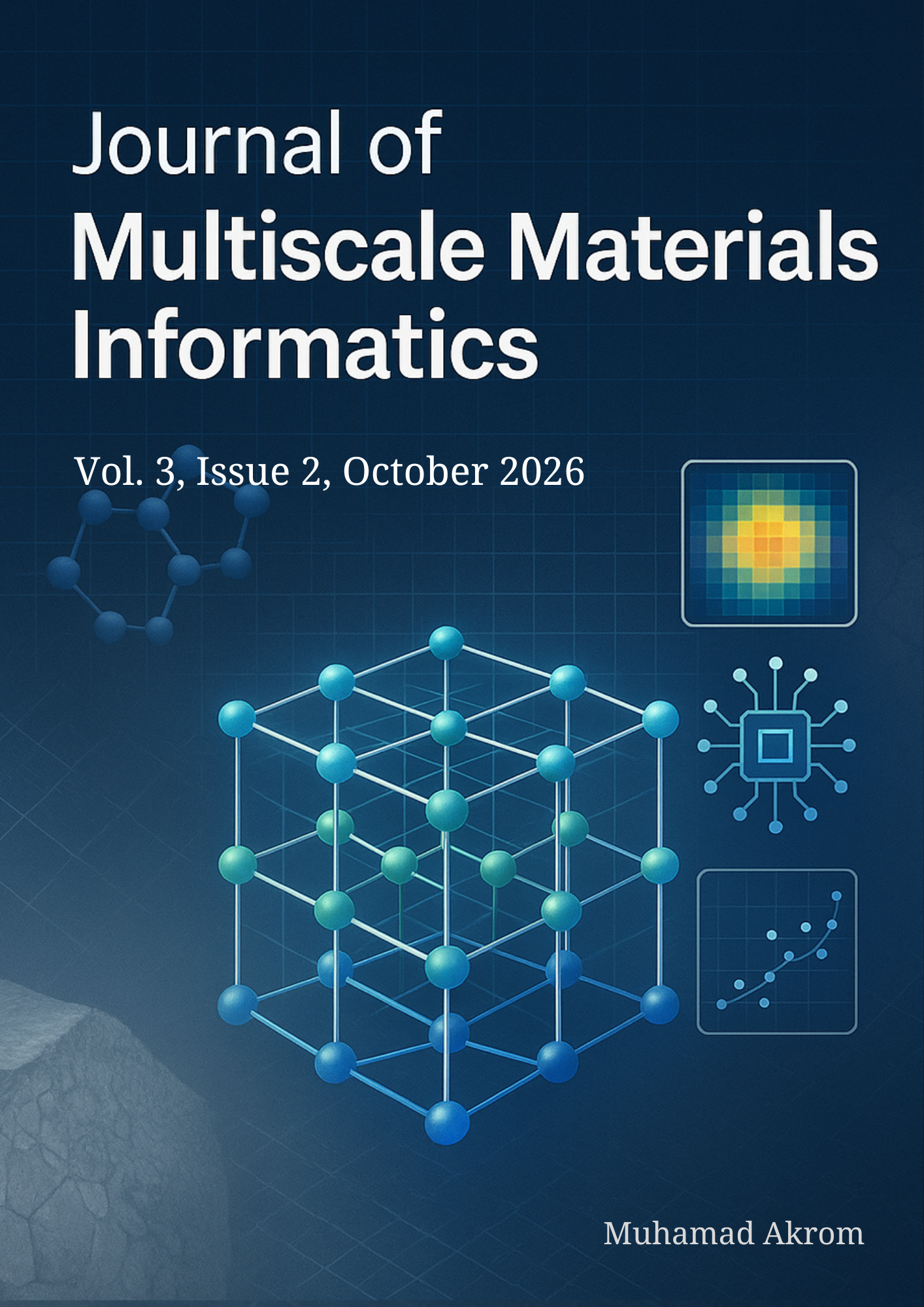
JIMAT is a peer-reviewed international journal covering the foundations, theories, and applications of computer science and materials science. All accepted articles are published online, assigned a DOI via CrossRef, and made freely accessible under an Open Access model with no article processing charges (APC).
JIMAT publishes high-quality, interdisciplinary research in artificial intelligence, data science, and computational methods and welcomes original research papers in, but not limited to, the following areas:
Artificial Intelligence and Intelligent Systems
Big Data Analytics and Knowledge Discovery
Data Science and Data Mining
Machine Learning and Deep Learning
Computer Vision and Image Processing
Natural Language Processing and Speech Processing
Pattern Recognition and Signal Processing
Cloud Computing and Distributed Systems
Cybersecurity, Cryptography, and Information Security
Internet of Things and Smart Systems
Information Systems and Data Infrastructure
Quantum Computing and Quantum Information
Soft Computing and Computational Science
Bioinformatics and Computational Biology
Chemoinformatics and Data-Driven Chemistry
Materials Informatics and Scientific Data Analysis
Special emphasis is placed on emerging, interdisciplinary research that integrates artificial intelligence, advanced computational methods, and domain knowledge to address complex real-world challenges in science and engineering.


Indexed by:
 |
 |
 |
 |
 |
This journal is licensed under a Creative Commons Attribution 4.0 International License.

ISSN: 3047-5724
Journal of Multiscale Materials Informatics, published by Universitas Dian Nuswantoro, Indonesia, collaborates with the Research Group for Quantum Computing and Materials Informatics.