
The Relationship Between Community Knowledge and Attitudes Toward Latrine Availability in Telaga Nipa, West Seram Regency
DOI:
https://doi.org/10.60074/visikes.v24i2.12574Keywords:
Knowledge, Attitude, Basic sanitation, Community knowledge and attitude, Cross-sectional sanitation study, Public health rural sanitationAbstract
Background: Basic sanitation plays a vital role in enhancing human health by ensuring a clean environment, with the availability of proper latrines being essential for the safe disposal of human waste and the prevention of disease transmission. Objective: This study aimed to identify the factors influencing the availability of basic sanitation facilities, particularly family latrines, in Telaga Nipa, located in West Seram Regency. Method: A quantitative research design with a cross-sectional approach was applied, involving 100 households, using univariate and bivariate analyses including the chi-square test. Results: The findings showed that both community knowledge and attitudes were significantly associated with the availability of latrines (P value = 0.038 for both), indicating a strong correlation between public understanding and the presence of sanitation facilities. Conclusion: It is essential to improve community awareness and attitudes regarding sanitation to enhance access to proper, health-compliant latrines and support better public health outcomes. Novelty: This study contributes novel empirical data from an underreported and remote region in Eastern Indonesia, highlighting behavioral determinants as critical factors in household sanitation infrastructure.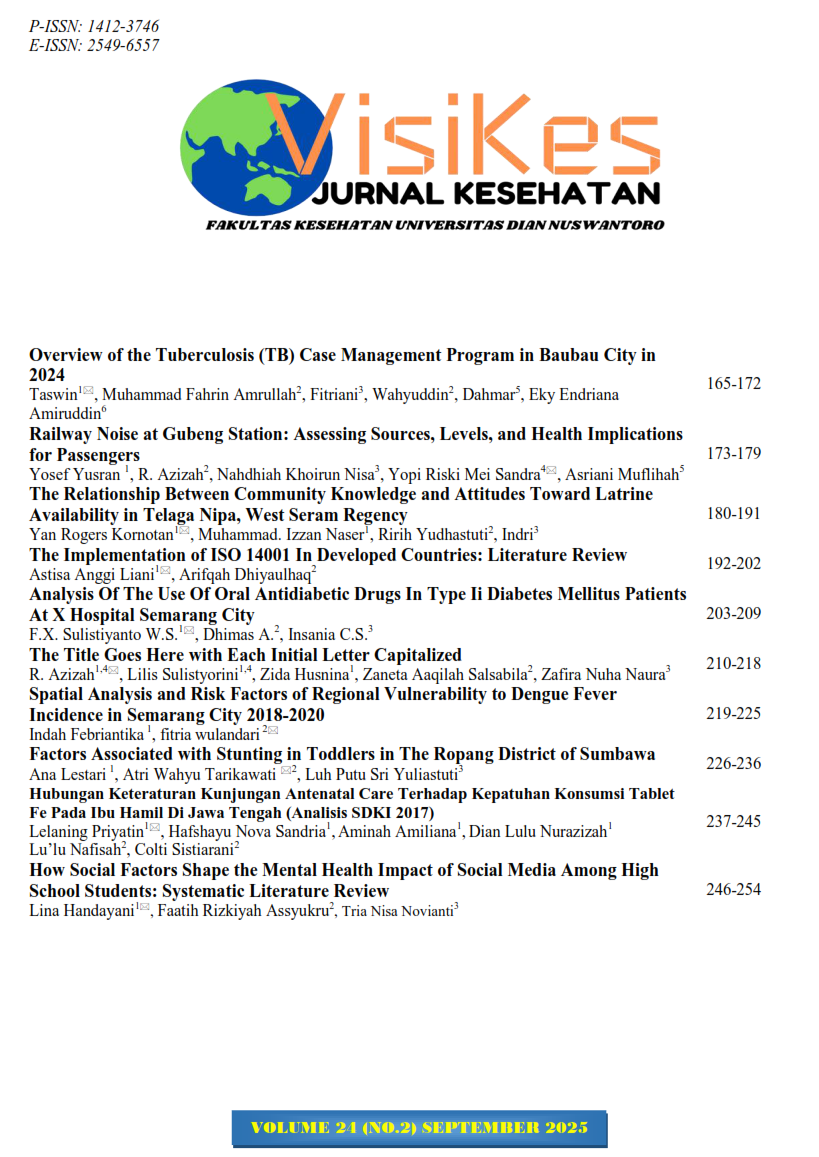
Downloads
Published
2025-11-14
Issue
Section
Articles
License

This work is licensed under a Creative Commons Attribution-NonCommercial 4.0 International License.