
PERSEPSI PROVIDER MENGENAI RENCANA PENERAPAN KEBIJAKAN KELAS RAWAT INAP STANDAR (KRIS) DALAM PROGRAM JKN DI SALAH SATU RS SWASTA DI KAB. PEMALANG
DOI:
https://doi.org/10.60074/visikes.v24i1.12546Keywords:
Standard Inpatient Class, JKN, Provider Perception, Hospital Readliness, KRIS PolicyAbstract
This study aims to analyze the perceptions and readiness of healthcare providers in implementing the Standard Inpatient Class (Kelas Rawat Inap Standar/ KRIS) policy under the National Health Insurance (JKN) program in Indonesia. The study employed a quantitative descriptive method with a cross-sectional design involving 151 respondents who completed structured questionnaires. Data were analyzed using univariate and bivariate (Spearman Rank correlation) analysis. The results showed that most respondents (90%) agreed that hospitals should implement KRIS and recognized the existence of 12 essential criteria. A majority of respondents (88%–90%) believed that KRIS would improve inpatient service quality, ensure patient safety, enhance equity through a single class system, and increase access to standardized healthcare services. Regarding hospital readiness, most respondents (above 88%) agreed on the need for infrastructure improvement, addition of medical equipment, hiring specialists, staff training, investment, and partnerships. The Spearman Rank test showed a very strong and significant relationship (r = 0.712; p = 0.000) between providers’ perceptions and planned actions. These findings highlight that although providers show positive perceptions toward KRIS, substantial preparation and support are required to ensure successful implementation.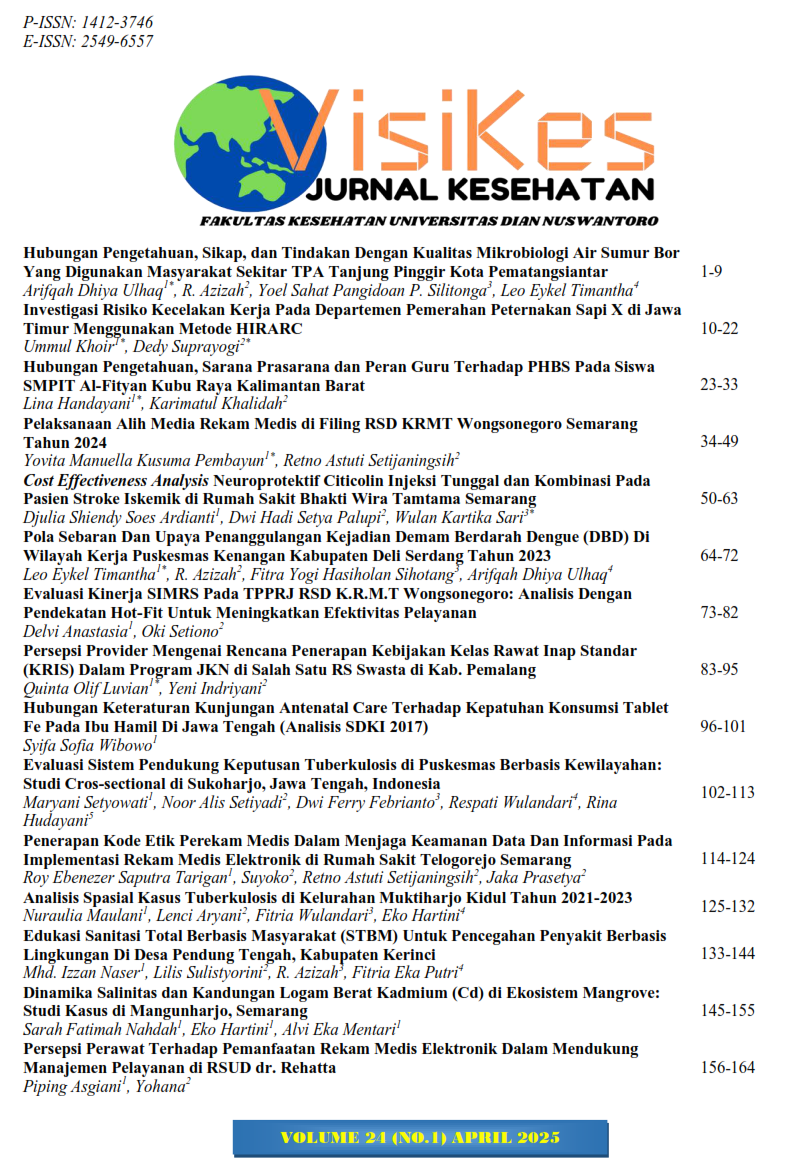
Downloads
Published
2025-04-20
Issue
Section
Articles
License

This work is licensed under a Creative Commons Attribution-NonCommercial 4.0 International License.