
Spatial Analysis and Risk Factors of Regional Vulnerability to Dengue Fever Incidence in Semarang City 2018-2020
DOI:
https://doi.org/10.60074/visikes.v24i2.12286Keywords:
Population density, Gender, Age, RainfallAbstract
The high number of dengue hemorrhagic fever cases in Semarang City from year to year without being able to know the main cause and from a fairly high level of rainfall, the dominant case attacks men, affects the ages of children to adolescents, and the level of diverse population density is quite several variables according to the data studied. The purpose of this study was to determine the vulnerability of each sub-district area to dengue hemorrhagic fever in the Semarang city. This study used an descriptive method with a Cross Sectional approach. The research data uses secondary data which is then processed and analyzed with the QGIS application and uses statistical tests to determine the strength of the relationship. The results showed that there was no relationship between population density, gender, age and rainfall with cases of dengue hemorrhagic fever (P<0.070), it can be concluded that all districts in Semarang City are endemic areas that are vulnerable to dengue hemorrhagic fever events. For the people of Semarang City, they should pay more attention to personal health and environmental health by implementing 3M plus, in order to avoid dengue hemorrhagic fever.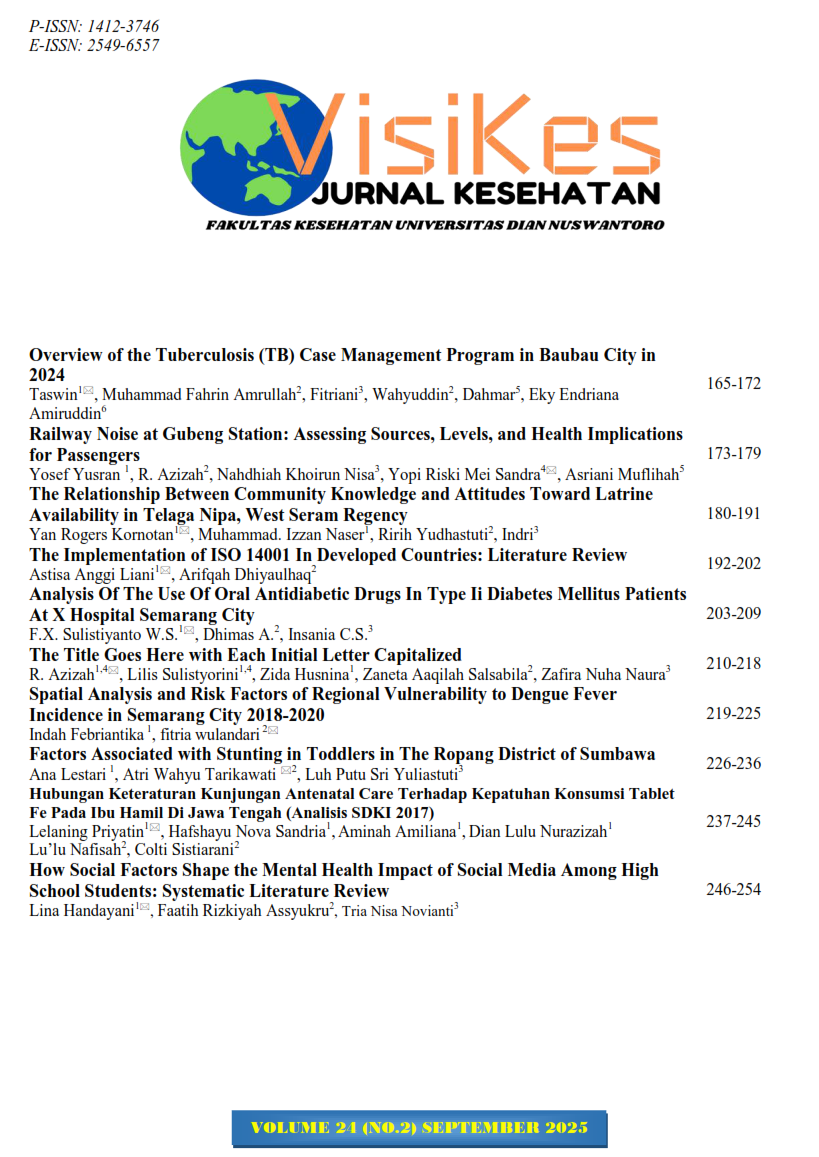
Downloads
Published
2025-11-14
Issue
Section
Articles
License

This work is licensed under a Creative Commons Attribution-NonCommercial 4.0 International License.