
POLA SEBARAN DAN UPAYA PENANGGULANGAN KEJADIAN DEMAM BERDARAH DENGUE (DBD) DI WILAYAH KERJA PUSKESMAS KENANGAN KABUPATEN DELI SERDANG TAHUN 2023
DOI:
https://doi.org/10.60074/visikes.v24i1.12018Keywords:
Dengue Fever, Distribution Pattern, Determinants of IncidenceAbstract
The dengue virus is the cause of dengue hemorrhagic fever, according to the World Health Organization (WHO).Dengue fever is called “breakbone fever” (joint fever) because it causes severe pain as if a bone is broken. The purpose of this case-control observational study was to identify the DHF risk variables and distribution pattern.The sample size was 1:1 with 22 cases and 22 controls. Analysis of distribution patterns used average nearest neighbor and overlay. Risk factors and incidence were analyzed Chi-square is used for both univariate and bivariate analysis with a 95% confidence level (α = 0.05). With a p-value of 0.0<0.05, the findings indicated a correlation between the occurrence of DHF and the removal of mosquito nests. Furthermore, a p-value of 0.01<0.05 indicated a correlation between the incidence of DHF and the gauze installation. The pattern of population distribution is seen from the distribution pattern, population density comparison, and buffering. The abstract will be revised to include a brief explanation about dengue fever control efforts, such as the 3M Plus mosquito nest eradication (PSN) activities and the installation of gauze on ventilation, which were analyzed as part of the study variables influencing DHF incidence.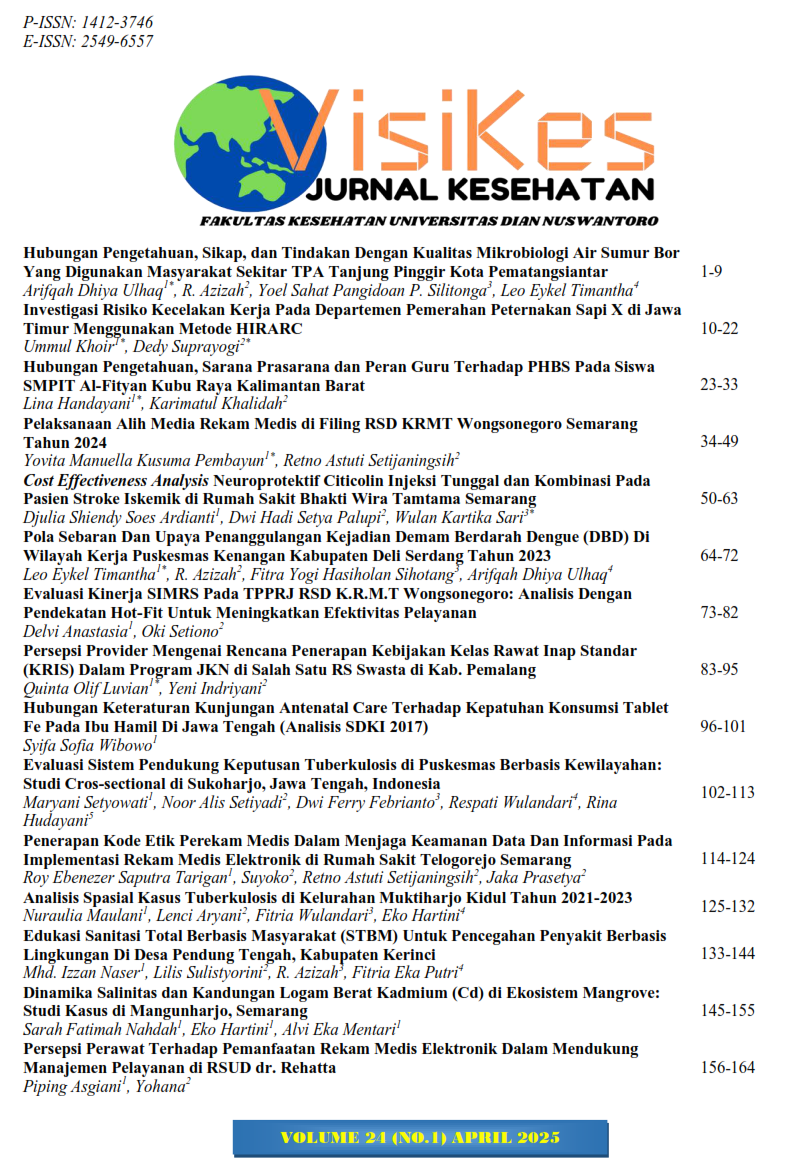
Downloads
Published
2025-04-20
Issue
Section
Articles
License

This work is licensed under a Creative Commons Attribution-NonCommercial 4.0 International License.